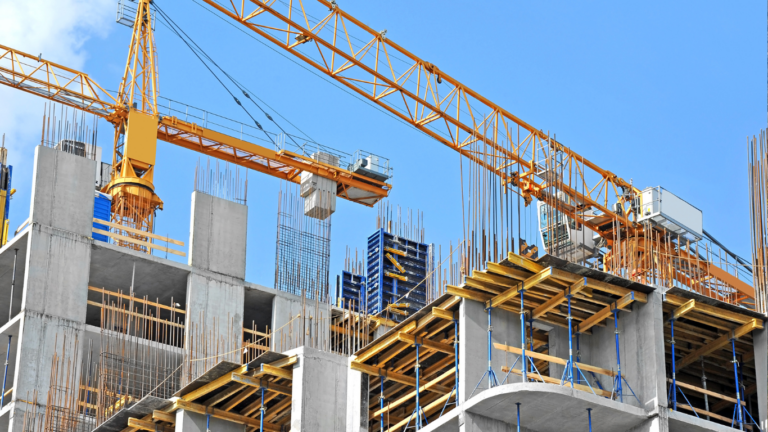
Kenya’s real estate sector continues to demonstrate strong momentum, with the market projected to reach approximately KES 773 billion in 2025. This growth reflects increasing investor confidence, rapid urbanization, and sustained demand for property ownership.
Yet amid this expansion lies an important reality: successful property investment requires more than attractive marketing and market optimism.
For many buyers — particularly first-time investors and diaspora clients — navigating the real estate landscape can still feel complex, fragmented, and difficult to verify.
Growth Brings Opportunity — and Responsibility
Kenya’s property market presents significant opportunities, but growth does not automatically eliminate risk. Recent industry data indicates that real estate non-performing loans (NPLs) rose to KES 118.6 billion in Q4 2024, highlighting ongoing challenges such as delayed project completion, stalled developments, financing constraints, and delivery uncertainties.
These figures serve as an important reminder: a growing market still demands disciplined decision-making. In fact, as opportunities increase, due diligence becomes even more critical.
The Due Diligence Challenge in Property Investment
One of the persistent challenges within Kenya’s real estate ecosystem remains information asymmetry.
Compared to more mature property markets, buyers in Kenya often have limited access to centralized, verified development information. Although the proposed 2023 Real Estate Regulation Bill aims to strengthen oversight and introduce greater sector accountability, many investors today still operate in an environment where independent verification is limited.
As a result, major property decisions are often influenced by:
- Marketing campaigns and brochures
- Sales referrals and agent recommendations
- Developer promises and projections
- Social proof and word-of-mouth credibility
For diaspora investors, the challenge can be even greater due to limited physical access and reduced ability to conduct on-ground verification.
Nairobi Continues to Offer Strong Investment Potential
Despite these structural gaps, Nairobi remains one of the region’s most compelling real estate investment destinations.
Ongoing infrastructure expansion, population growth, and increasing demand for quality housing continue to strengthen market fundamentals. Prime locations such as Kilimani, Kileleshwa, Westlands, alongside emerging metropolitan satellite towns, continue attracting both homeowners and investors.
However, opportunity delivers the best outcomes when paired with informed decision-making.
Because while high-potential investments exist, inadequate due diligence can expose buyers to risks such as:
- Delayed project handovers
- Poor construction quality
- Incomplete approvals or unclear documentation
- Misaligned expectations and unmet promises
- Capital locked into underperforming developments
Why Developer Selection Matters More Than Ever
In today’s market, choosing the right developer can be just as important as choosing the right location.
At Sydia Realty, we believe property advisory should extend beyond simply showcasing available inventory. It should involve rigorous project evaluation long before opportunities are introduced to clients.
Our philosophy is straightforward: not every project qualifies.
We prioritize developments based on key fundamentals, including:
- Developer credibility and reputation
- Proper approvals and documentation
- Project feasibility and execution readiness
- Delivery track record
- Long-term investment value
Because in an evolving market, curation is not just convenience — it is a critical part of risk management.
The Future of Real Estate Investment Is Informed Investing
Kenya’s property sector is maturing.
Regulatory improvements are likely to strengthen transparency over time, and market systems will continue evolving. However, today’s investors are best positioned when they work with partners who prioritize diligence, transparency, and quality over volume.
The opportunities within Nairobi’s property market are real.
But smart investing begins with verification before commitment.
Final Thought
Real estate is rarely just about purchasing property.
It is about preserving capital, building long-term wealth, and making investment decisions that remain valuable over time.
In a fast-growing market, informed choices are not optional — they are essential.